Why I Built a Portuguese ChatGPT (and What Bootstrappers Miss About Non-English AI)
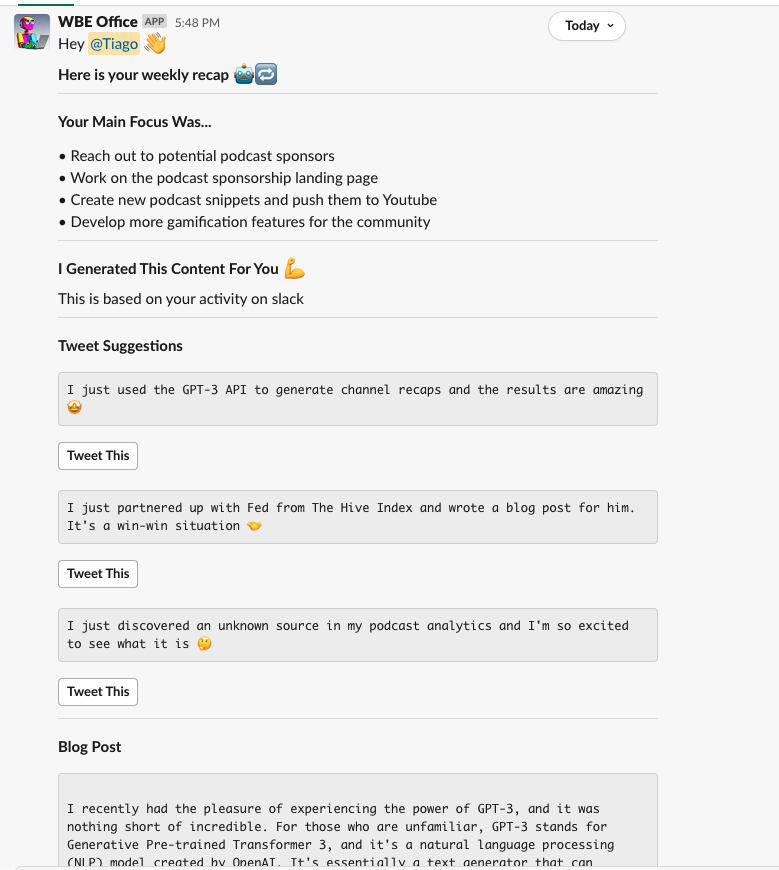
A few years ago I was playing with GPT-3 in my Slack community and writing movie scripts with ChatGPT. Like a lot of indie makers, I treated AI as this magical English-first thing that happened to work okay if you spoke another language.
Then I started talking to Portuguese users.
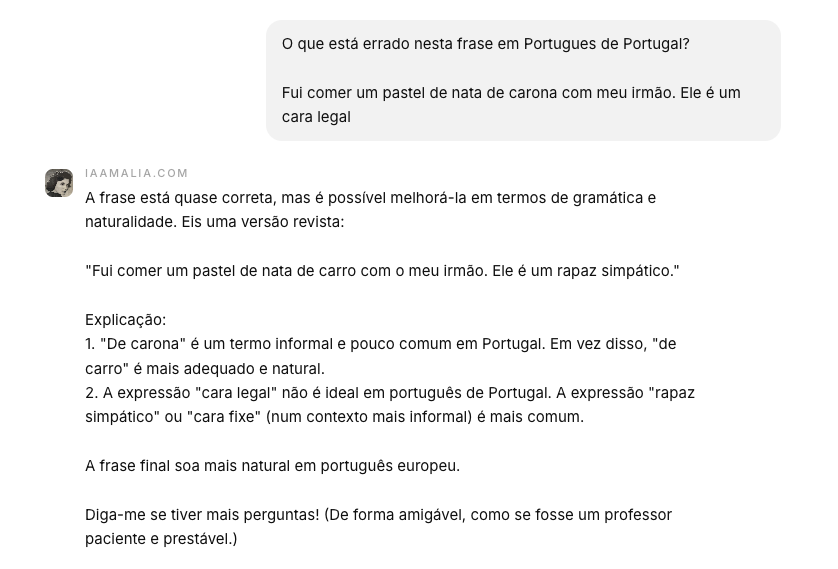
And it hit me: ChatGPT is not built for Portugal. It writes Brazilian Portuguese by default. It guesses Portuguese law. It invents bus schedules. It sounds foreign even when the grammar is correct.
So we built IA Amália — a ChatGPT-like product on top of Portugal’s own open-source LLM, trained for European Portuguese.
This is not a “look at my AI toy” post. It is a post about a market most bootstrappers still ignore.
The opportunity nobody ships for
Indie hackers love AI wrappers. Most of them wrap the same English APIs for the same English audience.
That leaves a huge gap:
- Language is not translation. pt-PT is not pt-BR with different spelling. Vocabulary, bureaucracy, culture, and everyday references are different. A model that “speaks Portuguese” can still feel wrong to someone in Lisbon.
- Local context wins. People do not only want essays. They want answers about IRS, Idealista listings, Diário da República, Carris schedules, and grants that actually exist in Portugal.
- Sovereignty is a real buying reason. A lot of people are tired of sending every question to a US or Chinese black box. An open-source national model is a story that resonates — especially with professionals and companies.
If you are building only for English SaaS Twitter, you are competing with thousands of founders. If you build for a language and country you actually understand, the competition drops fast.
What Amália actually is
Amália is a freemium chat app powered by the AMALIA model — Portugal’s open-source LLM for European Portuguese (Apache 2.0, weights on Hugging Face, trained with sources like Arquivo.pt).
We did not train the foundation model. Our job as bootstrappers was to turn it into a useful product:
- A chat that feels native in português de Portugal
- Tools connected to real Portuguese life (legislation, tax, Idealista, transit, citizen and company incentives, web search)
- A translator and a grants finder on top of the same stack
- Free tier for anyone to try, Pro for unlimited use, Enterprise for custom agents
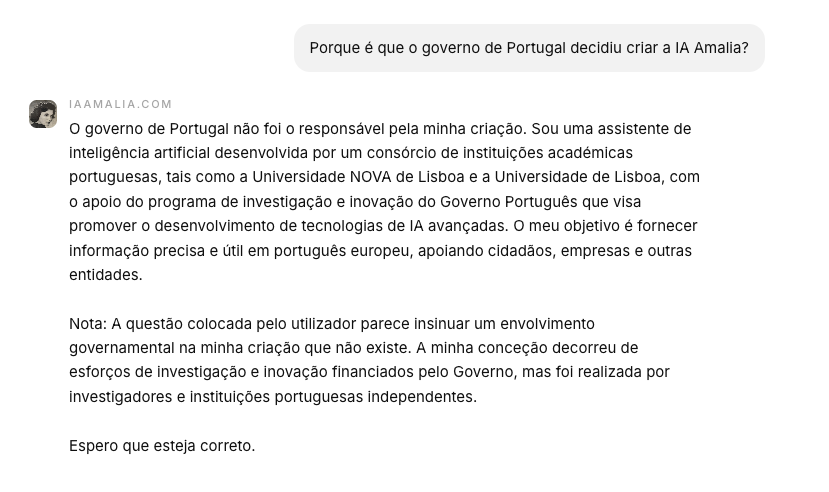
The positioning is simple: the Portuguese entry point to AI, not another generic chatbot with a translated UI.
Lessons for bootstrappers building outside English
1. Start from the language gap, not the model hype
The model is cool. The pain is cooler.
Portuguese users were already using ChatGPT — and constantly correcting it. That is product-market signal. You do not need a trillion-parameter model to win a local market. You need to be correct where the global tools are vaguely wrong.
2. Wrap local tools, not just a prompt
A Portuguese LLM alone is interesting. A Portuguese LLM that can check Idealista, look up the Diário da República, or explain an IRS rule with real sources is useful.
If you are building for your country, ask: what APIs and public data would make the product feel native in week one?
3. Non-English markets compound with your other products
We already had PodSqueeze helping podcasters (including big media groups in Portugal). Expanding AI tools beyond English was already part of the story. Amália fits the same arc: build for creators and professionals where English-only AI leaves money and trust on the table.
Your unfair advantage is often distribution + local trust, not another GPT wrapper landing page.
4. Open source + national narrative is marketing that VCs cannot easily copy
“We fine-tuned GPT for X” is a crowded pitch. “Portugal’s open LLM, in European Portuguese, with local tools” is memorable. Bootstrappers should lean into stories that big platforms cannot tell without sounding fake.
Try it
If you speak Portuguese — or you want to see what a country-specific ChatGPT looks like — try iaamalia.com.
And if you are an indie maker staring at yet another English AI idea: look at your own language, your own bureaucracy, your own local data. That market is still weirdly empty.
The English AI gold rush is loud. The non-English one is quieter — and that is exactly why it is interesting.